
Knee Revision
Home - Knee Revision
Get In Touch Us Today
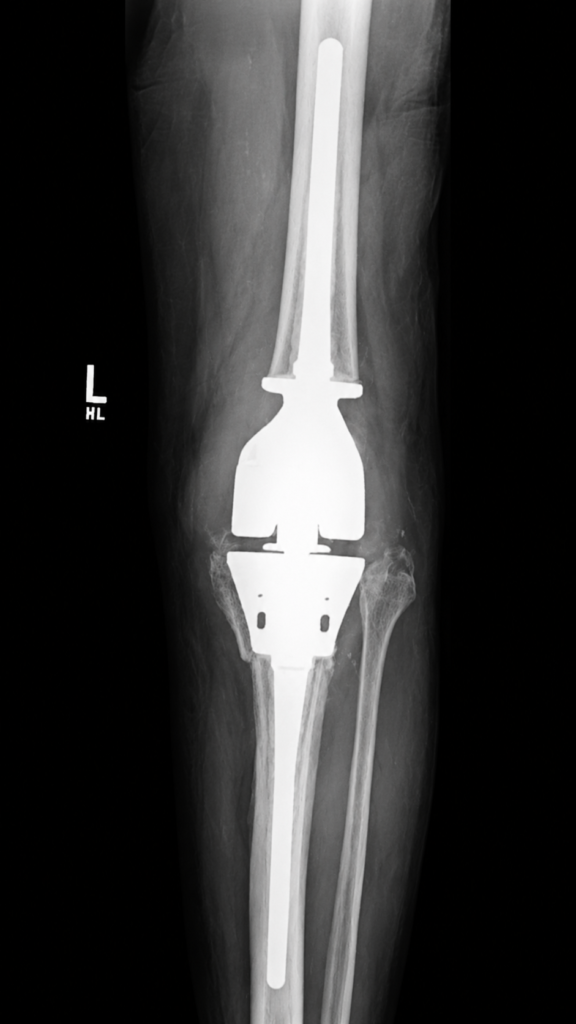
Expert Care for Failed Knee Replacements
Revision knee replacement is performed when a previous total knee replacement has failed and is causing significant pain, instability, infection, stiffness, or other problems. Successful revision requires a surgeon who understands why knee replacements fail and has the experience to address the underlying problem. Each case requires individualized planning.
With extensive experience in complex revision knee surgery, I tailor each procedure to the patient’s needs, previous surgery, bone quality, and reason for failure. Depending on whether the supporting ligaments are intact, specialized implants may be needed to restore stability. Some patients may also require bone grafts or tendon/ligament graft substitutes to address bone loss or soft-tissue deficiency.
Our goal is to restore stability and function, relieve pain, and maximize the opportunity for a successful recovery.
Expert Care for a Failed or Complicated Knee Replacement
A knee replacement is designed to relieve pain and restore mobility. But sometimes a previous knee replacement can develop problems that affect comfort, stability, movement, or overall function.
When a previous knee replacement is no longer functioning properly, revision knee replacement surgery may be necessary.
Dr. Ajay Srivastava specializes in adult hip and knee reconstruction, including complex revision knee surgery. Each revision procedure is carefully planned around the reason for failure, the condition of the existing implant, bone quality, ligament stability, and the patient’s individual goals.
What Is Knee Revision Surgery?
Knee revision surgery, also called revision total knee replacement, is a procedure performed to repair or replace some or all components of a previous knee replacement.
Revision surgery is different from an initial knee replacement because the surgeon must first understand why the original replacement is causing problems.
Depending on the situation, revision surgery may involve:
- Removing one or more existing implant components
- Replacing damaged or loose implants
- Treating infection
- Addressing bone loss
- Restoring knee stability
- Repairing or managing damaged soft tissues
- Using specialized revision implants
- Using bone grafts when appropriate
- Using tendon or ligament graft substitutes when necessary
The goal is to address the underlying problem while restoring stability, mobility, and function as safely as possible.
Why Do Knee Replacements Fail?
A previous knee replacement can develop problems for a number of reasons.
Implant Loosening
Over time, an implant may become loose from the surrounding bone. This can cause pain, instability, or difficulty walking.
Infection
An infection involving a knee replacement is a serious complication that requires specialized evaluation and treatment.
Instability
If the knee does not remain properly balanced or stable, patients may experience a feeling that the knee is giving way or moving abnormally.
Wear of Implant Components
Artificial joint components can experience wear over time. In some cases, significant wear can contribute to pain, instability, or damage to surrounding bone.
Stiffness
Some patients develop significant loss of motion following knee replacement, making walking, sitting, climbing stairs, or performing everyday activities difficult.
Fracture Around the Implant
A fracture involving the bone surrounding a knee implant may require complex reconstructive treatment.
Bone Loss
Bone loss around an existing implant can make revision surgery more complicated and may require specialized implants or bone grafting techniques.
Ligament or Soft-Tissue Problems
Damage or deficiency involving supporting ligaments and soft tissues can affect knee stability and may require additional reconstructive strategies.
When Should You Consider a Knee Revision?
You should discuss your symptoms with an orthopedic specialist if your previous knee replacement is causing:
- Persistent or worsening knee pain
- New pain after a period of improvement
- Knee instability
- A feeling that your knee is giving way
- Increasing stiffness
- Reduced range of motion
- Difficulty walking
- Swelling
- Recurrent fluid around the knee
- Problems with your implant identified on imaging
- Suspected infection
- A fracture around the knee replacement
- Difficulty returning to normal daily activities
Pain after knee replacement does not automatically mean that revision surgery is needed.
A detailed evaluation is necessary to determine the underlying cause and whether revision surgery, non-surgical treatment, or another intervention is appropriate.
Why Is Revision Knee Replacement More Complex?
Revision surgery can be more complicated than a primary knee replacement because the surgeon is working with a knee that has already undergone surgery.
There may be:
- Existing implants
- Scar tissue
- Bone loss
- Ligament deficiency
- Soft-tissue damage
- Changes in normal anatomy
- Previous infection
- Reduced bone quality
The surgical plan therefore needs to be individualized.
Dr. Srivastava evaluates the patient’s previous surgery, current symptoms, implant condition, bone quality, ligament stability, and reason for failure before determining the appropriate revision strategy.
What Happens During Knee Revision Surgery?
The exact procedure depends on the reason your previous knee replacement has failed.
During revision surgery, the surgeon may:
Evaluate the Existing Knee Replacement
The existing implants and surrounding tissues are carefully assessed.
Remove Damaged Components
If an implant is loose, worn, infected, or otherwise problematic, one or more components may need to be removed.
Address Bone Loss
If bone has been lost around the previous implant, specialized techniques and materials may be used to restore the structural foundation needed for the new implant.
Restore Knee Stability
If the supporting ligaments are damaged or insufficient, specialized implants may be needed to provide appropriate stability.
Replace the Failed Components
New revision implants can be selected based on the patient’s anatomy, bone quality, ligament condition, and specific surgical requirements.
Treat Infection When Present
When infection is involved, treatment requires a specialized plan that may include additional procedures and antibiotic treatment.
Specialized Implants for Complex Knee Revision
Not every revision knee replacement requires the same type of implant.
The implant selected depends on factors such as:
- Bone quality
- Bone loss
- Ligament stability
- Alignment
- Existing implant design
- Previous surgeries
- Soft-tissue condition
- Reason for revision
When supporting ligaments are not intact, specialized revision implants may be required to restore stability. In some cases, bone grafts or tendon/ligament graft substitutes may also be necessary.
Why Choose Dr. Ajay Srivastava for Knee Revision?
Specialized Adult Reconstruction Expertise
Dr. Srivastava’s practice focuses on adult hip and knee reconstruction, including complex revision procedures.
More Than 15 Years of Experience
Dr. Srivastava has more than 15 years of clinical experience and has cared for more than 5,000 hip and knee replacement patients.
Individualized Surgical Planning
Every failed knee replacement has a different cause. Treatment is planned around the patient’s specific symptoms, previous surgery, implant condition, bone quality, and overall knee stability.
Complex Revision Experience
Revision surgery may require specialized implants, bone reconstruction, and management of soft-tissue or ligament problems. Dr. Srivastava has particular expertise in complex revision procedures.
Evidence-Based Orthopedic Care
Dr. Srivastava’s practice emphasizes evidence-based decision-making and individualized treatment. His professional work includes research and quality-improvement initiatives involving joint replacement outcomes, implant performance, infection, revision risk, and patient safety.
Patient-First Approach
Treatment decisions begin with understanding the patient’s symptoms, concerns, lifestyle, and goals. Surgery is considered as part of an individualized treatment plan rather than as the automatic answer to every painful knee replacement.
Diagnosing a Failed Knee Replacement
Before recommending revision surgery, your orthopedic surgeon needs to identify why the knee replacement is causing problems.
Your evaluation may include:
Medical History
Your surgeon will review your previous knee replacement, symptoms, previous treatments, and when your problems began.
Physical Examination
The knee may be evaluated for:
- Stability
- Range of motion
- Swelling
- Tenderness
- Alignment
- Strength
- Walking pattern
Imaging
X-rays and other imaging studies may help evaluate implant position, loosening, alignment, bone loss, or other structural problems.
Laboratory Testing
Blood tests or other investigations may be recommended when infection is suspected.
Joint Fluid Testing
In selected situations, fluid from the knee may be analyzed to help determine whether infection is present.
The exact diagnostic process depends on your symptoms and clinical findings.
Knee Revision for Infection
Specialized Evaluation Is Important
Infection involving a knee replacement requires careful evaluation and treatment.
Signs that may raise concern for infection include:
- Increasing pain
- Swelling
- Warmth
- Redness
- Drainage
- Fever
- Wound problems
- A knee replacement that becomes painful after previously functioning well
However, infection can sometimes occur without obvious symptoms.
If infection is suspected, your surgeon may recommend laboratory testing, imaging, joint aspiration, or other diagnostic procedures.
Treatment depends on factors such as the type of infection, how long it has been present, implant stability, and the condition of the surrounding tissues.
Preparing for Knee Revision Surgery
Preparation is particularly important for complex revision surgery.
Your care team may recommend:
Medical Clearance
If you are under the care of other specialists, appropriate medical clearance may be required before surgery.
Preoperative Testing
Hospital pre-admission testing may be performed to evaluate your overall health and help determine anesthesia requirements.
Physical Therapy / PreHab
Preoperative physical therapy may help prepare your muscles and mobility before surgery.
Plan Transportation
Arrange transportation to and from the hospital and plan for postoperative assistance.
Prepare Your Home
Keep walkways clear and arrange your home so that essential items are easily accessible during the early recovery period.
Optimize Your Health
If you have diabetes, maintaining appropriate blood-sugar control may be important. Smoking cessation and good nutrition can also support surgical preparation.
Recovery After Knee Revision
Recovery after revision knee replacement can be different from recovery after a primary knee replacement.
The timeline depends on:
- Reason for revision
- Extent of reconstruction
- Bone loss
- Ligament condition
- Infection treatment
- Overall health
- Muscle strength
- Physical therapy
- Individual healing
Your recovery may include:
- Pain management
- Walking assistance
- Physical therapy
- Range-of-motion exercises
- Strengthening
- Gradual increase in activity
- Follow-up appointments
- Monitoring for complications
Because revision surgery can be more complex, recovery may take longer than recovery from an initial knee replacement.
Your surgeon and rehabilitation team will provide a personalized recovery plan.
What Can You Expect After Knee Revision?
The goal of revision surgery is to address the underlying problem and improve:
- Knee stability
- Pain
- Mobility
- Range of motion
- Function
- Ability to perform everyday activities
However, revision surgery is complex, and outcomes vary depending on the reason for revision and the condition of the knee.
A realistic recovery plan and close communication with your orthopedic team are important parts of the process.
Knee Revision in Flint, Michigan
If you are searching for a knee revision surgeon in Flint, MI, it is important to understand that revision surgery is different from a primary knee replacement.
Complex cases may require specialized implants, bone reconstruction, ligament management, infection treatment, or other advanced techniques.
Dr. Ajay Srivastava provides adult reconstruction and complex revision knee care in Flint, Michigan, with treatment plans tailored to the reason your previous knee replacement is causing problems.
Frequently Asked Questions
What is knee revision surgery?
Knee revision surgery is a procedure performed to address problems with a previous knee replacement. It may involve replacing some or all of the existing components and treating underlying problems such as loosening, infection, instability, stiffness, or bone loss.
Why would someone need a knee revision?
- Common reasons include implant loosening, infection, instability, stiffness, wear, fracture around the implant, bone loss, or persistent pain associated with a previous knee replacement.
Is knee revision surgery more difficult than the first knee replacement?
Revision surgery is often more complex because the surgeon may have to work around existing implants, scar tissue, bone loss, ligament problems, or previous infection.
Does a painful knee replacement always need revision surgery?
No. Pain after knee replacement can have many causes, and revision surgery is not automatically required. A detailed orthopedic evaluation is necessary to identify the cause and determine appropriate treatment.
What are the signs of a failed knee replacement?
Possible signs include persistent or worsening pain, instability, stiffness, swelling, reduced mobility, difficulty walking, or problems with the implant identified during evaluation.
Can a loose knee replacement be revised?
If an implant has become loose and is causing symptoms, revision surgery may be considered. The appropriate treatment depends on the cause and extent of loosening.
Can an infected knee replacement be revised?
Yes. Revision procedures can be part of the treatment for an infected knee replacement, but infection requires a specialized diagnostic and treatment plan.
What happens if there is bone loss during knee revision?
Depending on the amount and location of bone loss, surgeons may use specialized revision implants, bone grafts, or other reconstructive techniques to restore stability and support the new implant.
Will I need a specialized implant for knee revision?
Not necessarily. Implant selection depends on the individual case. Patients with ligament deficiency, bone loss, instability, or other complex problems may require specialized revision implants.
How long does recovery take after knee revision?
Recovery varies significantly. Revision surgery may require a longer recovery than a primary knee replacement, particularly when extensive reconstruction or infection treatment is involved.
Will I need physical therapy after knee revision?
Physical therapy is commonly an important part of recovery, although the exact rehabilitation plan depends on the procedure performed and your surgeon’s recommendations.
Can knee revision restore normal knee function?
The goal is to improve pain, stability, mobility, and function, but results vary. Your surgeon can discuss realistic expectations based on your specific condition.
Can a knee revision fail again?
Yes. As with any major joint replacement procedure, revision surgery carries risks and there is a possibility of future problems. Your surgeon can discuss the specific risks associated with your case.
How do I know if I need a knee revision surgeon?
If your previous knee replacement is painful, unstable, stiff, infected, or otherwise not functioning properly, an evaluation by an orthopedic surgeon specializing in adult reconstruction and revision surgery can help identify the cause and treatment options.
What are client's says about us
EXCELLENTTrustindex verifies that the original source of the review is Google. Posted on GoogleTrustindex verifies that the original source of the review is Google. Pleasant professional thoroughPosted on GoogleTrustindex verifies that the original source of the review is Google. Very professionalPosted on GoogleTrustindex verifies that the original source of the review is Google. Posted on GoogleTrustindex verifies that the original source of the review is Google. explained choices well and pros and cons.Posted on GoogleTrustindex verifies that the original source of the review is Google. Efficient and extremely good bedside manor. Positive experience.Posted on GoogleTrustindex verifies that the original source of the review is Google. Professional friendly office.Posted on GoogleTrustindex verifies that the original source of the review is Google. Posted on GoogleTrustindex verifies that the original source of the review is Google. Posted on GoogleTrustindex verifies that the original source of the review is Google. I felt so much better after talking to him…He’s sooo nice..