
Hip Replacement
Home - Hip Replacement
Get In Touch Us Today
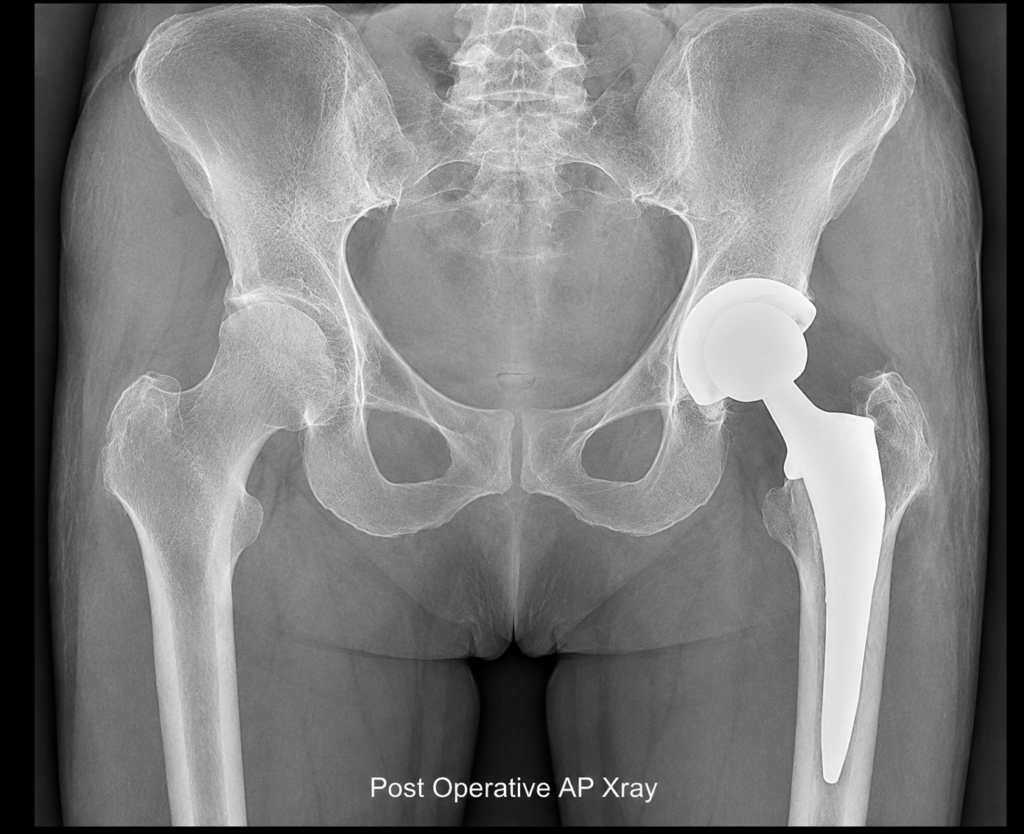
Excellent Care for Hip Arthritis
Our Rapid Recovery Protocol uses multimodal pain management and opioid-sparing strategies to provide effective pain control while helping patients mobilize early. Most patients can expect to resume routine daily activities by approximately six weeks, and many are able to drive within three weeks, depending on their individual recovery and comfort.
Every patient’s recovery is different, but our goal is consistent: less pain, earlier mobility, and a faster return to the activities that matter most.
Move With Less Pain. Get Back to the Life You Love.
Hip pain can affect almost every part of your daily life—from walking and climbing stairs to getting in and out of a car, sleeping comfortably, or enjoying your favorite activities. Approximately 4–5 million Americans are estimated to live with symptomatic hip osteoarthritis. Among adults over age 50, about 1 in 5 shows radiographic evidence of hip osteoarthritis and approximately 4% have symptomatic disease.
When arthritis or other damage has significantly affected your hip and conservative treatments are no longer providing enough relief, hip replacement surgery may be an option.
Dr. Ajay Srivastava is a board-certified orthopedic surgeon specializing in adult hip and hip reconstruction, with particular expertise in minimally invasive direct anterior hip replacement and modern joint replacement techniques.
What Is Hip Replacement Surgery?
Hip replacement surgery, also called total hip arthroplasty, is a procedure that replaces damaged portions of the hip joint with artificial components.
The hip is a ball-and-socket joint. The ball is formed by the top of the thighbone, while the socket is part of the pelvis. Arthritis or other conditions can damage the cartilage that normally allows these surfaces to move smoothly.
During hip replacement, the damaged portions of the joint are replaced with specially designed implants made up of titanium, covered chrome and polyethylene or ceramic head.
The goal of hip replacement is not simply to replace a damaged joint. It is to help reduce pain, improve mobility, restore function, and help patients return to the activities that are important to them.
When Should You Consider Hip Replacement?
Hip replacement may be considered when hip pain and stiffness begin to significantly affect your daily life. One should try conservative treatment like physical therapy, over-the-counter medication’s like Tylenol. Losing 5 to 10% of body weight and doing low impact exercise is very helpful. Once the non-operative measures have failed, surgery could be considered.
Common signs that it may be time to discuss hip replacement with an orthopedic specialist include:
- Persistent or worsening hip pain
- Pain while walking or standing
- Difficulty climbing or descending stairs
- Hip stiffness or reduced range of motion
- Swelling and inflammation
- Difficulty sleeping because of hip pain
- Difficulty participating in activities you enjoy
- Limited improvement from medications, injections, or physical therapy
- Advanced arthritis or significant cartilage damage
- Reduced independence because of hip problems
Not everyone with hip arthritis needs surgery. A comprehensive evaluation can help determine whether non-surgical treatment or hip replacement is appropriate.
Direct Anterior Hip Replacement
A Modern, Muscle-Sparing Approach
Dr. Srivastava specializes in direct anterior hip replacement, a surgical approach that accesses the hip through the front of the body.
Rather than routinely cutting through major muscles to reach the hip, the direct anterior approach works through a natural interval between muscles.
This muscle-sparing approach may provide benefits during the early recovery period for appropriately selected patients, including potentially less early pain and faster early functional recovery. However, individual outcomes vary, and the best surgical approach depends on your anatomy, diagnosis, previous surgeries, and other factors.
Potential Advantages of the Direct Anterior Approach
- Muscle-sparing surgical approach
- Access to the hip through the front of the joint
- Potential for earlier mobility
- May reduce early postoperative discomfort for some patients
- Real-time X-ray imaging can assist with implant positioning
- Focus on accurate implant placement and restoration of hip function
- Designed to support a structured and efficient recovery
The direct anterior approach is not automatically the right choice for every patient. Your surgeon will determine whether it is appropriate based on your individual condition.
Why Choose Dr. Ajay Srivastava for Hip Replacement?
Patient-First Approach
Every patient has different goals, concerns, lifestyle needs, and expectations. Treatment recommendations are based on understanding the individual patient rather than following a one-size-fits-all approach.
Specialized Joint Replacement Expertise
Dr. Srivastava focuses on adult hip reconstruction, including Direct Anterior, minimal invasive total hip replacement and revision hip replacement. Dr. Srivastava has more than 15 years of clinical experience and has cared for more than 5,000 hip and hip replacement patients.
Modern Surgical Techniques
His practice incorporates contemporary surgical techniques, minimally invasive approaches when appropriate, robotic-assisted technology, and modern pain-management strategies. There are many techniques popular on social media and in normal conversation. You need a surgeon who understands every aspect and scientific detail behind those treatment methods. Dr. Srivastava rigorously evaluates any modern surgical approach or change, and once he finds strong evidence based on good-quality research, only then will he incorporate it into his practice.
Rapid Recovery Program
A coordinated rapid recovery approach can include multimodal pain management, early mobilization, physical therapy, and patient education to support a smoother recovery. Rapid recovery starts with understanding the process at the time surgery is scheduled. Our physical therapy department will have a one-on-one conversation with you to explain what to expect. We use pain medications that work through different mechanisms to provide maximum pain relief, and the approach is always adjusted based on the individual.
Evidence-Based Orthopedic Care
Treatment decisions are guided by current scientific evidence, clinical expertise, and each patient’s individual circumstances. We have access to increasing amounts of data and contradictory research papers being published every day. It has become increasingly difficult to understand what’s real and what’s not. Dr. Srivastava has training in evaluating and understanding scientific data and its interpretation. Dr. Srivastava has also contributed to national orthopedic guidelines and quality-improvement initiatives.
Compassionate Patient Care
Patients need a surgeon who understands both the medical and social needs involved in preparing for surgery. At the end of the day, we are treating a human being, so empathy and personal connection are key parts of the joint replacement journey. From your initial consultation through rehabilitation, the focus remains on communication, education, comfort, and helping you return to the activities that matter most to you.
What Happens During Anterior Hip Replacement?
During direct anterior hip replacement, the patient is positioned on their back while the surgeon accesses the hip through an incision at the front.
A specialized operating table can assist with positioning and controlled movement of the leg during surgery.
Dr. Srivastava also uses real-time X-ray imaging during appropriate anterior hip replacement procedures. This can help assess implant positioning, hip alignment, leg length, and other important surgical factors.
The damaged portions of the hip are removed and replaced with artificial components designed to restore the function of the joint.
Rapid Recovery After Hip Replacement
Focused on Comfort, Mobility & Safe Recovery
A rapid recovery program is not about rushing the healing process. Instead, it combines multiple strategies designed to control pain, encourage early movement, reduce complications, and help patients safely return home and resume normal activities.
Dr. Srivastava’s current hip replacement program includes:
- Multimodal pain management
- Opioid-sparing pain strategies
- Early mobilization
- Physical therapy
- Frequent walking
- Ice and swelling management
- Patient education
- Individualized postoperative instructions
Many patients are able to go home the same day and begin walking with assistance shortly after surgery, when medically appropriate.
Preparing for Hip Replacement Surgery
Good preparation can help make your surgical experience more organized and your recovery more comfortable.
Medical Clearance
Medical clearance may be required before surgery, especially if you are being treated for other health conditions or are under the care of a specialist such as a cardiologist or nephrologist.
PreHab & Physical Therapy
Preoperative physical therapy or “PreHab” may help prepare your muscles and body for surgery and recovery.
Prepare Your Home
Clear walkways, remove tripping hazards, and arrange commonly used items so they are easy to reach.
Arrange Transportation
Plan transportation to and from the surgical facility and arrange postoperative support as recommended.
Nutrition
A healthy diet with adequate protein and iron can support your preparation for surgery.
Smoking Cessation
If you smoke, stopping before surgery can help reduce the risk of complications.
Medical Instructions
Follow all instructions from your surgical team regarding medications, testing, bathing, eating, and other preparation requirements.
What Is Hip Replacement Recovery Like?
Your surgery may be scheduled at surgery center or in one of the hospitals. Surgery will be performed according to predetermined plan and technology. Surgery usually takes about an hour, though it may feel longer to family members waiting outside because of the time needed for patient preparation, recovery, and postoperative care. Once patients are awake and alert, physical therapy will help them begin walking.
Patients having their joint replacement at the surgery center will work with a physical therapist and nursing staff to make sure they know and learn how to get in and out of bed, walk with the help of a walker, use stairs, and get in and out of a car. It is very important to make sure that you have prearranged help from your friends or family members who will be able to stay with you for a few days. Most people can take care of their personal needs after surgery and go home the same day.
Patients having their joint replacement at the hospital will work with a physical therapist and nursing staff to make sure they know and learn how to get in and out of bed, walk with the help of a walker, use stairs, and get in and out of a car. Most people can take care of their personal needs after surgery and go home the same day. Depending on individual needs and overall health, some patients may need to stay one night in the hospital. Transfer to a nursing home or rehabilitation facility depends on your recovery and insurance plan and cannot be guaranteed. It is always better and often safer to recover at home than to go to a facility.
Hip Replacement Recovery
Recovery after hip replacement varies from person to person. Patients will receive the appropriate amount and duration of pain medication. Physical therapy typically continues for about six weeks. We prefer therapy three times a week, but if that is not possible, attending at least twice a week is important. We encourage patients to walk as much as they can. You should also perform ankle range-of-motion exercises, also called ankle pumps, to improve blood flow in the calf and help reduce the risk of blood clots or DVT. You should attend outpatient physical therapy and perform home exercises. Your effort and exercise after surgery are the most important factors in a successful outcome. Most people are walker- or cane-free by two weeks. Most people are able to drive by three weeks, but this depends on individual pain level and the medications you take.
Key to recovery is:
- Early walking and movement
- Physical therapy
- Home exercises
- Gradual improvement in hip motion
- Progressive strengthening
- Gradual return to normal daily activities
The goal is to help you progress safely while restoring strength, mobility, and confidence.
Getting Back to Everyday Activities
A key goal of hip replacement is to help you return to the activities that make daily life meaningful. Most patients can resume routine activities by about six weeks. Around that time, you may still notice mild warmth near the incision or occasional pins-and-needles sensations. If you do too much too soon, your hip may ache for a few days; over-the-counter anti-inflammatory medication may help during that time. You should feel that each two-week period is better than the previous one. As long as your symptoms are steadily improving, you are on the right path toward a successful recovery. Patients whose jobs require standing for 8 to 10 hours a day, such as assembly line workers, may need up to three months before returning to full activity. Patients with hip replacement are not advised to sit on the ground cross-legged, in Indian style, or to deep squat like a baseball catcher. Your activities should be limited to chair height and above. You can do partial squats to stay fit. If your job requires kneeling or crawling, you should discuss your surgical options with Dr. Srivastava. Deep squatting is not possible for most patients, although some are able to do it after good physical therapy and improved range of motion. Walking and jogging are generally acceptable, and light running may be fine. Contact sports are not recommended. Most patients can resume nearly all of their usual activities by three months, but hip replacement recovery can continue for up to two to two and a half years after surgery, with gradual improvement over time.
Why Direct Anterior Hip Replacement May Be Right for You
For appropriately selected patients, the direct anterior approach offers a muscle-sparing way to perform total hip replacement.
Potential early-recovery benefits may include:
Muscle-Sparing Approach
The surgeon works through a natural interval between muscles rather than routinely cutting through major muscles.
Early Mobility
The approach is designed to support early movement after surgery.
Potentially Less Early Pain
Some studies have found less pain during the early postoperative period, although results vary between patients.
Real-Time Imaging
Intraoperative X-ray can help assess implant positioning and alignment.
Focus on Rapid Recovery
The surgical approach can be combined with multimodal pain management and early rehabilitation strategies.
It is important to understand that long-term outcomes can be excellent with several properly performed hip replacement approaches. The appropriate approach depends on the patient and the surgeon’s experience.
Hip Replacement in Flint, Michigan
If you are searching for a hip replacement surgeon in Flint, MI, finding a specialist with focused experience in adult joint reconstruction can help you understand your options.
Dr. Ajay Srivastava provides hip replacement care in Flint, Michigan, with particular expertise in direct anterior hip replacement, modern joint replacement techniques, evidence-based treatment, and structured recovery protocols
Frequently Asked Questions
What is a total hip replacement?
Total hip replacement is a surgical procedure that replaces damaged portions of the hip joint with artificial components to help reduce pain and restore function. It usually involves placing a titanium shell, or cup, in the pelvis, called the acetabulum, and a small titanium rod at the top of the thighbone, called the femur. A ceramic or metal ball is placed on the rod, and a polyethylene liner is inserted into the cup.
Who needs hip replacement surgery?
- Hip replacement may be considered for patients with significant hip arthritis or other joint damage that causes persistent pain, stiffness, and difficulty with everyday activities despite appropriate non-surgical treatment. Your X-ray should show complete loss of joint space between the ball and socket. This is sometimes called bone-on-bone arthritis. You must have tried conservative treatments, such as over-the-counter medication, physical therapy, low-impact exercises, and weight loss when appropriate. After these conservative treatments have failed, you may be ready to proceed with hip replacement.
What is direct anterior hip replacement?
Direct anterior hip replacement is a surgical approach in which the surgeon reaches the hip from the front of the body. It uses a natural space between muscles, which is why it is often called a muscle-sparing approach. The procedure may use a specialized HANA table and real-time X-ray guidance to help position the cup and femoral component accurately, restore proper alignment, and compare leg length with the opposite side. Because this approach avoids cutting major muscles, many patients recover more quickly and experience less early postoperative pain. It may also help lower the risk of hip dislocation after total hip replacement. Overall, the direct anterior approach is designed to reduce pain, support accurate implant positioning and leg length, and lower certain postoperative complications.
Is anterior hip replacement better than posterior hip replacement?
There is no universally best approach for every patient. The anterior approach may offer certain early-recovery advantages for some patients, while several hip replacement approaches can provide excellent long-term outcomes. Your anatomy, diagnosis, previous surgery, and surgeon experience all matter.
How long does hip replacement recovery take?
Recovery varies by patient. Many patients gradually return to routine daily activities by 6 weeks, but your recovery timeline depends on factors including your overall health, surgical procedure, rehabilitation, and individual progress. Most patients are able to perform heavy duty work by three months.
How soon can I walk after hip replacement?
Early walking is an important part of many modern hip replacement recovery programs. Patients may begin standing and walking with assistance soon after surgery, often as early as 3 to 4 hours afterward. There is no set limit on how much you can walk, as long as you are comfortable. Most patients need a walker for the first few weeks, then may use a cane for a few days before walking without any assistive device.
Can hip replacement be done as an outpatient procedure?
For appropriately selected patients, hip replacement may be performed with a same-day discharge pathway. Dr. Srivastava’s current patient information states that most patients are able to go home the same day.
When can I drive after hip replacement?
Returning to driving after total hip or knee replacement depends on several factors, especially which side was operated on and how comfortably and safely you can control the vehicle. Many surgeons recommend waiting about four to six weeks. Some patients may be ready as early as two or three weeks especially after left-sided surgery, while others—particularly older patients or those with slower recovery—may need a month or more.
Side of Surgery Matters
In an automatic car, the right leg moves between the accelerator and brake. For that reason, a right hip or right knee replacement usually requires more caution before returning to driving. A left-sided replacement may allow an earlier return because the left leg is not used for braking in an automatic-transmission car. This guidance does not apply to manual-transmission vehicles.
What Studies Suggest
Studies of brake reaction time after knee replacement suggest that braking performance may return to preoperative levels by about four weeks after right knee replacement and as early as two weeks after left knee replacement. Some carefully selected patients may be able to drive at two weeks, but the number of weeks since surgery alone does not determine whether driving is safe.
Before You Drive
Before returning to driving, make sure all of the following are true:
- You are no longer taking opioid pain medicine.
- You can walk comfortably and safely.
- You can get in and out of the car without difficulty.
- You can move your foot quickly between the accelerator and brake.
- You can press the brake firmly without hesitation or pain.
- You feel comfortable sitting in the driver’s seat without significant pain or stiffness.
In an automatic car, you should be able to move your right foot repeatedly from the accelerator to the brake and back again quickly, smoothly, and without pain or hesitation. Before entering traffic, practice smooth stops and a firm emergency stop in an empty parking lot.
Always obtain clearance from your surgeon and follow local driving and insurance requirements.
Will I need physical therapy after hip replacement?
Physical therapy and prescribed exercises can help restore strength, mobility, balance, and function. Your surgeon and rehabilitation team will determine the appropriate rehabilitation plan.
What should I do before hip replacement surgery?
Preparation may include medical clearance, PreHab, pre-admission testing, arranging transportation, preparing your home, reviewing medications, maintaining good nutrition, and following your surgical team’s instructions.
How long does a hip replacement last?
The lifespan of a hip implant varies based on factors such as implant design, age, activity level, body weight, surgical technique, and other individual considerations. Based on data from the past 20 years, about 90% of hip replacements may last 20 years or longer. Implant longevity also depends on activity level. Contact sports or high-impact activities may increase the risk of earlier implant failure. In some cases, an infection can spread through the bloodstream to the hip replacement, which may require additional surgery.
What activities can I do after hip replacement?
Many patients gradually return to walking and other everyday activities after recovery. Higher-impact or specific recreational activities should be discussed with your surgeon based on your individual recovery.
What if I already have a hip replacement that is causing problems?
A painful or failed hip replacement may require a detailed evaluation. Depending on the cause, revision hip replacement may be considered. Dr. Srivastava also specializes in complex hip revision procedures.
What are client's says about us
EXCELLENTTrustindex verifies that the original source of the review is Google. Posted on GoogleTrustindex verifies that the original source of the review is Google. Pleasant professional thoroughPosted on GoogleTrustindex verifies that the original source of the review is Google. Very professionalPosted on GoogleTrustindex verifies that the original source of the review is Google. Posted on GoogleTrustindex verifies that the original source of the review is Google. explained choices well and pros and cons.Posted on GoogleTrustindex verifies that the original source of the review is Google. Efficient and extremely good bedside manor. Positive experience.Posted on GoogleTrustindex verifies that the original source of the review is Google. Professional friendly office.Posted on GoogleTrustindex verifies that the original source of the review is Google. Posted on GoogleTrustindex verifies that the original source of the review is Google. Posted on GoogleTrustindex verifies that the original source of the review is Google. I felt so much better after talking to him…He’s sooo nice..