
Hip Revision
Home - Hip Revision
Get In Touch Us Today
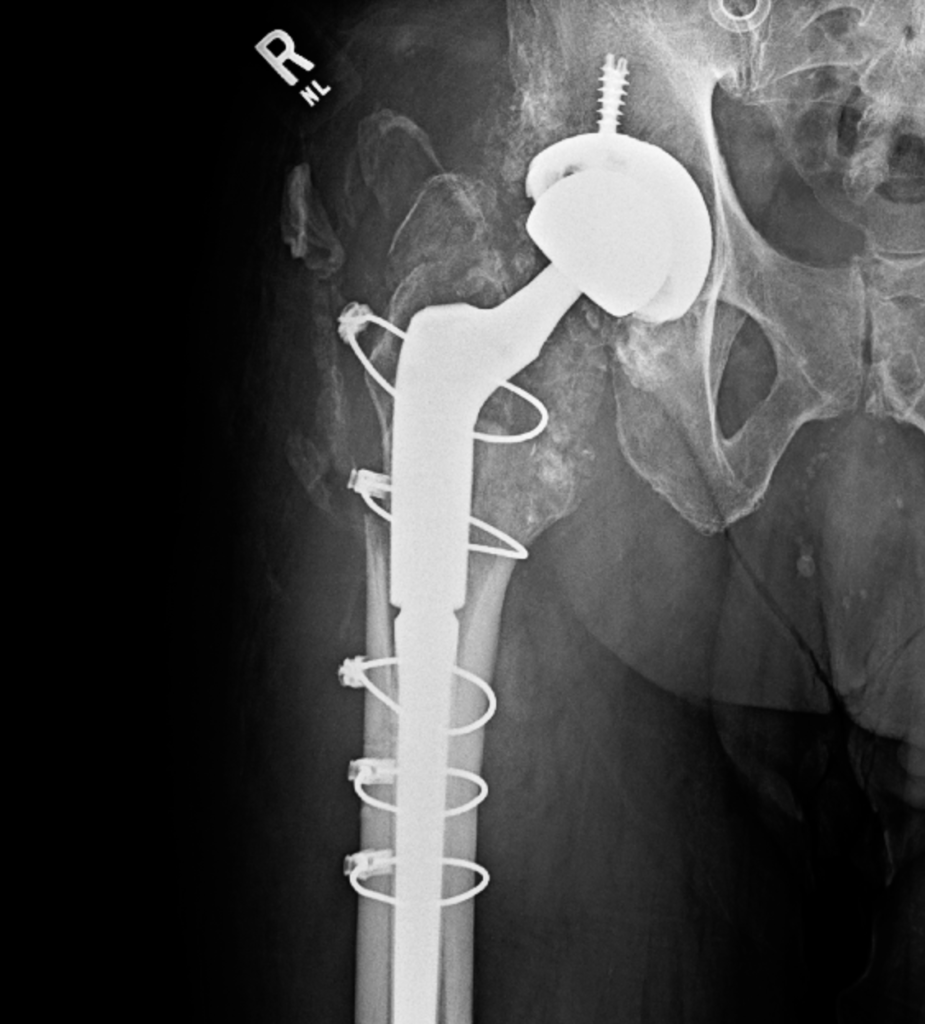
Expert Care for Failed Hip Replacements
Revision hip replacement is performed when a previous total hip replacement has failed and is causing significant pain, instability, infection, or other problems. Successful revision requires a surgeon who understands why hip replacements fail and has the experience to address the underlying problem. Each case requires an individualized approach and careful preoperative planning.
With extensive experience in complex revision hip surgery, I tailor each procedure to the patient’s specific needs, previous surgery, bone quality, and reason for failure. I practice at a tertiary referral center, where we have specialized expertise, advanced equipment, multiple implant options, and the necessary levels of backup to manage complex and unexpected situations.
Our goal is to provide comprehensive, carefully planned care that restores stability and function, relieves pain, and gives each patient the best possible opportunity for a successful recovery.
Specialized Care for a Failed or Complicated Hip Replacement
A hip replacement can provide significant pain relief and improved mobility. However, in some cases, a previous hip replacement can develop complications that affect comfort, stability, or function.
When a previous hip replacement is no longer functioning properly, revision hip replacement surgery may be considered.
Revision hip surgery is more complex than an initial hip replacement because the surgeon must evaluate the existing implant, surrounding bone, soft tissues, and the underlying reason for failure.
Dr. Ajay Srivastava specializes in adult hip and knee reconstruction, including complex revision procedures, with treatment plans tailored to each patient’s condition, previous surgery, and goals.
What Is Hip Revision Surgery?
Hip revision surgery, also called revision total hip replacement, is a procedure performed to repair or replace some or all components of a previous hip replacement.
Unlike primary hip replacement, revision surgery begins with determining why the existing hip replacement is causing problems.
Depending on the situation, revision surgery may involve:
- Removing a loose or damaged implant
- Replacing worn implant components
- Treating infection
- Correcting hip instability or dislocation
- Addressing bone loss
- Repairing damaged soft tissues
- Using specialized revision implants
- Using bone grafts when necessary
- Reconstructing the hip joint to restore stability and function
The goal is to address the underlying problem while restoring a stable, functional hip.
Why Do Hip Replacements Fail?
There are several reasons why a previous hip replacement may eventually require revision.
Implant Loosening
An implant can become loose from the surrounding bone over time. Loosening may cause pain, instability, or difficulty walking.
Infection
An infection involving a hip replacement is a serious complication that requires specialized evaluation and treatment.
Dislocation or Instability
A hip replacement can sometimes become unstable or dislocate. Recurrent dislocations may require surgical treatment to improve stability.
Implant Wear
Artificial hip components can wear over time. Significant wear can contribute to inflammation, bone loss, implant damage, or other complications.
Fracture Around the Implant
A fracture involving the bone around an existing hip replacement may require complex reconstruction.
Bone Loss
Bone surrounding an implant can deteriorate over time. Significant bone loss can make revision surgery more technically challenging.
Leg-Length or Alignment Problems
In some cases, differences in leg length or implant positioning may contribute to symptoms or functional problems.
Persistent Pain
Pain following hip replacement can have multiple causes. A detailed evaluation is necessary to determine whether the implant itself is responsible and whether revision surgery is appropriate.
When Should You Consider Hip Revision?
You should consider an evaluation with an orthopedic specialist if you experience:
- Persistent or increasing hip pain
- New pain after initially successful hip replacement
- Repeated hip dislocations
- A feeling of hip instability
- Difficulty walking
- Swelling around the hip
- Signs of infection
- A fracture near the hip implant
- Clicking or unusual sensations
- Increasing stiffness
- Problems identified with your hip implant during imaging
- Significant changes in your ability to perform everyday activities
Not every painful hip replacement requires revision surgery.
The first step is identifying the actual cause of your symptoms.
Why Is Hip Revision More Complex Than Primary Hip Replacement?
Revision hip surgery can be significantly more complicated because the surgeon is working around a previously operated joint.
The procedure may involve:
- Existing implants
- Scar tissue
- Bone loss
- Reduced bone quality
- Soft-tissue damage
- Abductor muscle problems
- Hip instability
- Previous infection
- Changes in normal anatomy
For this reason, revision surgery requires detailed planning and specialized experience.
The treatment plan may be different for every patient depending on the reason for failure and the condition of the existing hip replacement.
Diagnosing a Failed Hip Replacement
Before recommending revision surgery, your orthopedic surgeon needs to determine why the hip replacement is causing problems.
Your evaluation may include:
Medical History
Your surgeon will review your original hip replacement, previous procedures, symptoms, medications, and when your current problems started.
Physical Examination
Your hip may be evaluated for:
- Range of motion
- Stability
- Strength
- Tenderness
- Walking pattern
- Leg-length differences
- Muscle function
X-Rays and Imaging
Imaging can help identify:
- Implant loosening
- Implant positioning
- Bone loss
- Fractures
- Changes around the implant
- Other structural abnormalities
Additional imaging may be recommended when necessary.
Laboratory Testing
Blood tests may be used when infection is suspected.
Joint Aspiration
In selected cases, fluid may be obtained from the hip joint and analyzed to help determine whether an infection is present.
A thorough diagnosis is important because the treatment for an infected, loose, unstable, or worn hip replacement can be very different.
Revision Hip Replacement for Infection
Specialized Treatment for a Serious Complication
Infection around a hip replacement requires careful evaluation.
Possible symptoms can include:
- Increasing pain
- Swelling
- Redness
- Warmth
- Drainage
- Fever
- Wound problems
- New pain in a previously well-functioning hip
However, some infections may develop without obvious external symptoms.
Depending on the individual situation, treatment may involve:
- Laboratory testing
- Joint aspiration
- Antibiotic treatment
- Surgical cleaning
- Removal of implants
- Temporary components
- Staged revision surgery
The appropriate treatment depends on the type and duration of infection, implant stability, bone condition, and other patient-specific factors.
Specialized Implants for Hip Revision
Revision surgery does not always require the same type of implant used during a primary hip replacement.
Depending on the patient’s condition, specialized revision components may be required to address:
- Bone loss
- Implant loosening
- Hip instability
- Fracture
- Poor bone quality
- Previous implant failure
- Complex anatomical changes
Bone grafting or other reconstructive techniques may also be considered when significant bone loss is present.
The goal is to restore a stable foundation for the revised hip replacement
Why Choose Dr. Ajay Srivastava for Hip Revision?
Specialized Adult Reconstruction Expertise
Dr. Srivastava focuses on adult hip and knee reconstruction, including complex hip revision procedures.
More Than 15 Years of Experience
His practice includes extensive experience in hip and knee replacement and complex revision surgery.
Individualized Surgical Planning
Every failed hip replacement has a different cause. Surgical planning takes into consideration:
- Previous surgery
- Existing implant
- Bone quality
- Bone loss
- Soft-tissue condition
- Hip stability
- Infection status
- Patient goals
Complex Revision Experience
Revision hip surgery can require specialized implants, bone reconstruction, soft-tissue management, and advanced surgical techniques.
Evidence-Based Treatment
Treatment recommendations are based on clinical evidence, surgical experience, and the individual circumstances of each patient.
Patient-First Approach
The goal is to understand not only what is wrong with the existing hip replacement, but also how the problem is affecting your everyday life.
What Happens During Hip Revision Surgery?
The exact procedure depends on the cause of the failed hip replacement.
Step 1: Evaluate the Existing Implant
The surgeon evaluates the existing components and surrounding tissues.
Step 2: Remove Problematic Components
Loose, damaged, worn, or infected components may need to be removed.
Step 3: Address Bone Loss
If bone has been lost around the implant, specialized reconstruction may be necessary.
Step 4: Restore Stability
If the hip is unstable, specialized implants or soft-tissue reconstruction may be used to improve stability.
Step 5: Place Revision Components
New components are selected according to the patient’s anatomy, bone quality, and surgical requirements.
Step 6: Restore Hip Function
The final goal is to create a stable hip that allows the patient to progress through rehabilitation and return to appropriate daily activities.
Recovery After Hip Revision Surgery
Recovery after hip revision is different for every patient.
Compared with a primary hip replacement, revision surgery can require a longer and more carefully monitored recovery.
Recovery may include:
- Pain management
- Walking assistance
- Physical therapy
- Strengthening exercises
- Range-of-motion exercises
- Activity modifications
- Follow-up imaging
- Regular postoperative appointments
The recovery timeline depends on the extent of revision, bone reconstruction, infection treatment, soft-tissue condition, overall health, and other factors.
Your surgeon will provide specific instructions regarding weight-bearing, walking, exercise, and activity progression.
Preparing for Hip Revision Surgery
Because revision surgery can be complex, proper preparation is particularly important.
Medical Clearance
Your medical history and overall health will be evaluated before surgery.
Preoperative Testing
Blood work, imaging, cardiac evaluation, or other testing may be recommended depending on your health.
Infection Evaluation
If infection is suspected, additional tests may be necessary before surgery.
Medication Review
Tell your medical team about all prescription medications, over-the-counter medications, and supplements you take.
Prepare Your Home
Remove potential tripping hazards and make frequently used items easily accessible.
Arrange Transportation and Support
Plan transportation and postoperative assistance according to your surgeon’s instructions.
Optimize Your Health
Maintaining appropriate nutrition, managing chronic conditions, and stopping smoking when applicable can help prepare your body for surgery.
Hip Revision vs. Primary Hip Replacement
Primary Hip Replacement | Revision Hip Replacement |
|---|---|
First hip replacement | Previous hip replacement already exists |
Treats the original damaged joint | Addresses problems with an existing replacement |
Generally more straightforward | Often more technically complex |
Usually has normal bone anatomy | May involve bone loss or scar tissue |
Standard implants may be appropriate | Specialized implants may be necessary |
Typically planned around original anatomy | Planning must account for previous surgery |
Revision surgery is not simply “doing another hip replacement.” It is a specialized procedure designed to address a specific problem with the existing hip replacement.
What Are the Goals of Hip Revision Surgery?
The goals depend on the reason for revision but may include:
- Reducing pain
- Treating infection
- Improving hip stability
- Addressing implant loosening
- Correcting mechanical problems
- Restoring bone support
- Improving mobility
- Improving hip function
- Helping the patient return to appropriate daily activities
Because revision surgery is complex, the expected outcome depends heavily on the underlying problem and condition of the hip.
Hip Revision in Flint, Michigan
If you are searching for a hip revision surgeon in Flint, MI, it is important to find an orthopedic specialist with experience in adult reconstruction and complex revision procedures.
Dr. Ajay Srivastava provides specialized hip and knee reconstruction care in the Flint, Michigan area, including evaluation and treatment of complications involving previous joint replacements.
An individualized evaluation can help determine the cause of your symptoms and whether revision surgery or another treatment approach is appropriate.
Frequently Asked Questions
What is hip revision surgery?
Hip revision surgery is a procedure used to repair or replace some or all components of a previous hip replacement when the implant has developed a problem.
Why would someone need a hip revision?
- Common reasons include implant loosening, infection, instability or repeated dislocation, implant wear, fracture, bone loss, or persistent problems associated with the original replacement.
Is hip revision surgery more difficult than the first hip replacement?
- Revision surgery is often more complex because the surgeon may need to work around existing implants, scar tissue, bone loss, soft-tissue damage, or previous infection.
Does a painful hip replacement always need revision?
- No. Pain can have many causes. A detailed evaluation is necessary to identify the source of pain before deciding whether revision surgery is appropriate.
What are the signs of a failed hip replacement?
- Possible signs include persistent or worsening pain, instability, repeated dislocation, difficulty walking, swelling, infection symptoms, fracture, or problems identified around the implant on imaging.
Can a loose hip replacement be revised?
- Yes. When an implant becomes loose and is causing symptoms, revision surgery may be considered. The appropriate approach depends on the extent and cause of loosening.
Can an infected hip replacement be revised?
- Yes. Revision surgery can be part of treatment for an infected hip replacement. Treatment may involve antibiotics, surgical cleaning, implant removal, temporary components, or staged reconstruction depending on the situation.
What happens if there is bone loss around my hip implant?
- Bone loss may require specialized revision components, bone grafting, or other reconstructive techniques to create adequate support for the new implant.
Can a dislocated hip replacement be revised?
- Repeated dislocation may sometimes require revision surgery. The cause of instability must first be determined so the appropriate surgical solution can be planned.
How long does recovery take after hip revision?
- Recovery varies considerably. Revision surgery can require a longer recovery than primary hip replacement, particularly when extensive reconstruction, bone grafting, or infection treatment is necessary.
Will I need physical therapy after hip revision?
- Rehabilitation is often an important part of recovery. Your physical therapy program will depend on the type of revision performed and your surgeon’s postoperative restrictions.
Can I walk normally after hip revision surgery?
- The goal of revision surgery is to restore a stable and functional hip, but recovery and final results vary. Your weight-bearing restrictions and walking progression will depend on your specific procedure.
Can a hip revision fail again?
- Yes. Revision surgery carries risks, and future complications are possible. Your surgeon can explain the specific risks and expected outcomes associated with your condition.
How do I know if I need a hip revision specialist?
- If you have persistent pain, instability, recurrent dislocation, suspected infection, implant loosening, or another problem with a previous hip replacement, an evaluation by an orthopedic surgeon experienced in adult reconstruction and revision surgery can help determine the appropriate next step.
What are client's says about us
EXCELLENTTrustindex verifies that the original source of the review is Google. Posted on GoogleTrustindex verifies that the original source of the review is Google. Pleasant professional thoroughPosted on GoogleTrustindex verifies that the original source of the review is Google. Very professionalPosted on GoogleTrustindex verifies that the original source of the review is Google. Posted on GoogleTrustindex verifies that the original source of the review is Google. explained choices well and pros and cons.Posted on GoogleTrustindex verifies that the original source of the review is Google. Efficient and extremely good bedside manor. Positive experience.Posted on GoogleTrustindex verifies that the original source of the review is Google. Professional friendly office.Posted on GoogleTrustindex verifies that the original source of the review is Google. Posted on GoogleTrustindex verifies that the original source of the review is Google. Posted on GoogleTrustindex verifies that the original source of the review is Google. I felt so much better after talking to him…He’s sooo nice..