
Knee Replacement
Home - Knee Replacement
Get In Touch Us Today
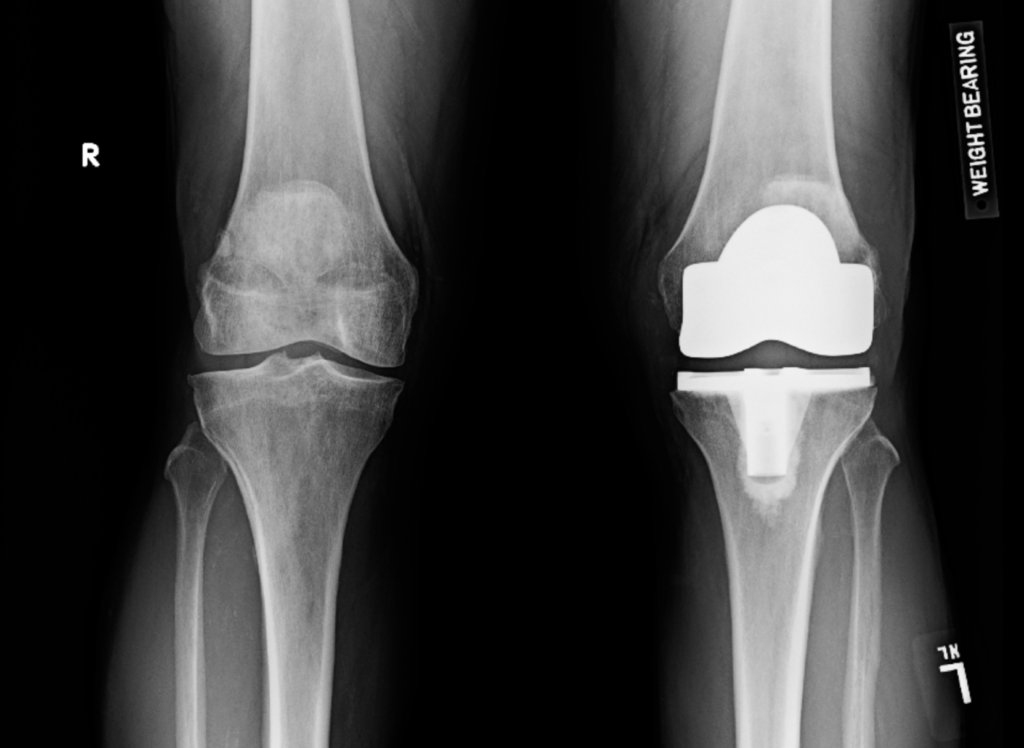
Long Lasting Answer for Severe Knee Arthritis
I specialize in total knee replacement, using modern surgical techniques designed to minimize tissue trauma, improve precision, and support a faster recovery. With extensive experience in knee replacement, most patients are able to go home the same day and begin walking with a walker shortly after surgery.
Our Rapid Recovery Protocol combines a pain-relieving medication cocktail with a targeted pain pump/local anesthetic technique to provide effective pain control while reducing the need for narcotic medications. Early mobilization and coordinated rehabilitation help patients regain motion and function quickly. Most patients can expect to resume routine daily activities by approximately six weeks, with many returning to driving within a few weeks, depending on their individual recovery.
Every patient’s recovery is different, but our goal is consistent: less pain, earlier mobility, and a faster return to the activities that matter most.
Relieve Knee Pain. Restore Mobility. Get Back to What Matters.
What Is Knee Replacement Surgery?
Knee replacement surgery, also called knee arthroplasty, is a procedure used to replace damaged portions of the knee joint with specially designed implants made up of titanium, covered chrome and polyethylene insert.
The procedure may be recommended when cartilage has significantly deteriorated because of osteoarthritis, rheumatoid arthritis, injury, or other conditions. During surgery, damaged joint surfaces are carefully removed and replaced with artificial components designed to restore the function of the knee.
The goal of knee replacement is not simply to replace a damaged joint. It is to help reduce pain, improve mobility, restore function, and help patients return to the activities that are important to them.
When Should You Consider Knee Replacement?
Knee replacement may be considered when knee pain and stiffness begin to significantly affect your daily life. One should try conservative treatment like physical therapy, brace, over-the-counter medication’s like Tylenol. Losing 5 to 10% of body weight and doing low impact exercise is very helpful. Once the non-operative measures have failed, surgery could be considered.
Common signs that it may be time to discuss knee replacement with an orthopedic specialist include:
- Persistent or worsening knee pain
- Pain while walking or standing
- Difficulty climbing or descending stairs
- Knee stiffness or reduced range of motion
- Swelling and inflammation
- Difficulty sleeping because of knee pain
- Difficulty participating in activities you enjoy
- Limited improvement from medications, injections, or physical therapy
- Advanced arthritis or significant cartilage damage
- Reduced independence because of knee problems
Not everyone with knee arthritis needs surgery. A comprehensive evaluation can help determine whether non-surgical treatment or knee replacement is appropriate.
When Should You Consider Knee Replacement?
Knee replacement may be considered when knee pain and stiffness begin to significantly affect your daily life. One should try conservative treatment like physical therapy, brace, over-the-counter medication’s like Tylenol. Losing 5 to 10% of body weight and doing low impact exercise is very helpful. Once the non-operative measures have failed, surgery could be considered.
Common signs that it may be time to discuss knee replacement with an orthopedic specialist include:
- Persistent or worsening knee pain
- Pain while walking or standing
- Difficulty climbing or descending stairs
- Knee stiffness or reduced range of motion
- Swelling and inflammation
- Difficulty sleeping because of knee pain
- Difficulty participating in activities you enjoy
- Limited improvement from medications, injections, or physical therapy
- Advanced arthritis or significant cartilage damage
- Reduced independence because of knee problems
Not everyone with knee arthritis needs surgery. A comprehensive evaluation can help determine whether non-surgical treatment or knee replacement is appropriate.
Your Knee Replacement Options
Knee replacement is not necessarily a one-size-fits-all procedure. Depending on the location and severity of arthritis, your surgeon may discuss different treatment options.
Total Knee Replacement
Knee can be understood as three-part joint: inner side of the knee, outer of the knee, front part of the knee (Patella). When all three sides of the knees are replaced at the same time as one unit, it’s called total knee replacement. Total knee replacement replaces the damaged surfaces of the knee joint.
Partial Knee Replacement
Partially replacement involves replacing either inner side (medial compartment replacement), outer side (lateral compartment replacement) or front or anterior of the knee (patellofemoral replacement).
Partial knee replacement may be appropriate for carefully selected patients whose arthritis is limited to one area of the knee. Because more of the natural knee is preserved, it can be an option for patients who meet specific clinical criteria.
Robotic-Assisted Knee Replacement
Robotic assisted knee replacement is evolving technology. It has potential to improve long-term outcome of knee replacement. Robotic-assisted technology can assist with surgical planning and implant positioning. Dr. Srivastava incorporates advanced robotic systems when appropriate as part of an individualized approach to knee replacement surgery.
Why Choose Dr. Ajay Srivastava for Knee Replacement?
Patient-First Approach
Every patient has different goals, concerns, lifestyle needs, and expectations. Treatment recommendations are based on understanding the individual patient rather than following a one-size-fits-all approach.
Specialized Joint Replacement Expertise
Dr. Srivastava focuses on adult hip and knee reconstruction, including total and partial knee replacement, revision procedures, and robotic-assisted surgery. Dr. Srivastava has more than 15 years of clinical experience and has cared for more than 5,000 hip and knee replacement patients.
Modern Surgical Techniques
His practice incorporates contemporary surgical techniques, minimally invasive approaches when appropriate, robotic-assisted technology, and modern pain-management strategies. There are many techniques popular on social media and in normal conversation. You need a surgeon who understands every aspect and scientific detail behind those treatment methods. Dr. Srivastava rigorously evaluates any modern surgical approach or change, and once he finds strong evidence based on good-quality research, only then will he incorporate it into his practice.
Rapid Recovery Program
A coordinated rapid recovery approach can include multimodal pain management, early mobilization, physical therapy, and patient education to support a smoother recovery. Rapid recovery starts with understanding the process at the time surgery is scheduled. Our physical therapy department will have a one-on-one conversation with you to explain what to expect. We use pain medications that work through different mechanisms to provide maximum pain relief, and the approach is always adjusted based on the individual.
Evidence-Based Orthopedic Care
Treatment decisions are guided by current scientific evidence, clinical expertise, and each patient’s individual circumstances. We have access to increasing amounts of data and contradictory research papers being published every day. It has become increasingly difficult to understand what’s real and what’s not. Dr. Srivastava has training in evaluating and understanding scientific data and its interpretation. Dr. Srivastava has also contributed to national orthopedic guidelines and quality-improvement initiatives.
Compassionate Patient Care
Patients need a surgeon who understands both the medical and social needs involved in preparing for surgery. At the end of the day, we are treating a human being, so empathy and personal connection are key parts of the joint replacement journey. From your initial consultation through rehabilitation, the focus remains on communication, education, comfort, and helping you return to the activities that matter most to you.
Frequently Asked Questions
What is the purpose of knee replacement surgery?
A Checklist to Help You Prepare For Your Surgery:
- Medical Clearance
- If you are currently under the care of a specialist, we will request clearance before your surgery.
- You may need to contact their office to schedule your appointment.
- PreHab and Physical Therapy
- If you have not already scheduled your PreHab and post-operative therapy, call OrthoMichigan Therapy Services at (810) 285-8523’
- Hospital Pre admission testing
- You will receive a call from the hospital to schedule pre-admission testing. This testing is to assess your
- overall health and determine your anesthesia needs.
- Transportation and post-operative arrangements
- You will need to make arrangements for transportation to and from the hospital on the day of surgery.
- Remember that your mobility will be limited, so organize your home to make it easy to move around and walkways as wide and uncluttered as possible.
- If you have diabetes, make sure your blood sugar is well controlled
- If you smoke, quit smoking. One month of cessation of smoking is extremely helpful in reducing the risk of complications.
- Eat a diet high in iron and protein
Washing Instructions to Prevent the Infections:
Using Mupirocin and Chlorhexidine gluconate (CHG) before surgery reduces the number of bacteria on your skin or in your nose which decreases the risk of an infection after surgery.
Mupirocin 2% ointment:
This is an antibacterial ointment. Pick up your Mupirocin prescription from the pharmacy five or more days before your surgery and follow the instructions below, TWICE each day:
1. Blow your nose and clean the inside of your nostrils with a tissue.
2. Wash your hands with soap and water or use hand sanitizer.
3. Open the tube of Mupirocin. Squeeze enough ointment from the tube to coat a cotton swab (about ½ ounce).
4. Put the swab into one nostril and gently move it around the lower part of the nostril in a circular motion. Be sure to touch all surfaces inside the nostril. Do the same thing on your other nostril using a clean swab.
5. Gently press the sides of the nose together and massage for 1 full minute so that the ointment is spread throughout the inside of the nostril. Take care not to get the ointment in your eyes.
6. When finished, wash your hands again. Do not blow your nose or put any other products in your nose.
7. Please do this twice daily (morning and evening) for 5 days in a row. The final use will be the night before your surgery. Some insurance companies do not cover the Mupirocin prescription. Coupons may be found at https://www.goodrx.com/mupirocin.
Bathing Using Chlorhexidine gluconate (CHG):
Buy over the counter CHG solution (Hibiclens) from ANY Pharmacy near you. Use it for five days before your surgery and follow the instructions below, each day:
1. With each shower, wash your hair as usual with your normal shampoo. Rinse your hair and body thoroughly afterward to remove the residue. Do not shave the area of your body where your surgery will be performed.
2. Turn the water off before applying the CHG soap to prevent rinsing it off too soon.
3. Apply CHG to your entire body from the jaw down. Do not get CHG soap in your eyes, ears, nose, mouth, or genital area.
4. Apply thoroughly for FIVE minutes (use a timer), paying special attention to the area where your surgery will be performed. Do not scrub your skin too hard. Do not wash with your regular soap after using CHG. Turn the water back on and rinse your body well.
5. Pat yourself dry with a clean, soft towel after each shower. Then put on clean clothes or pajamas and sleep on freshly laundered bed linens. Do not apply any lotions, roll on deodorants, perfumes, or powders after using CHG the day of surgery. If allergic to Chlorhexidine, use antibacterial soap (such as Dial) for your shower.
6. Please do this once daily (during your normal shower) for 5 days in a row. The final use will be the night before your surgery.
What are client's says about us
EXCELLENTTrustindex verifies that the original source of the review is Google. Posted on GoogleTrustindex verifies that the original source of the review is Google. Pleasant professional thoroughPosted on GoogleTrustindex verifies that the original source of the review is Google. Very professionalPosted on GoogleTrustindex verifies that the original source of the review is Google. Posted on GoogleTrustindex verifies that the original source of the review is Google. explained choices well and pros and cons.Posted on GoogleTrustindex verifies that the original source of the review is Google. Efficient and extremely good bedside manor. Positive experience.Posted on GoogleTrustindex verifies that the original source of the review is Google. Professional friendly office.Posted on GoogleTrustindex verifies that the original source of the review is Google. Posted on GoogleTrustindex verifies that the original source of the review is Google. Posted on GoogleTrustindex verifies that the original source of the review is Google. I felt so much better after talking to him…He’s sooo nice..